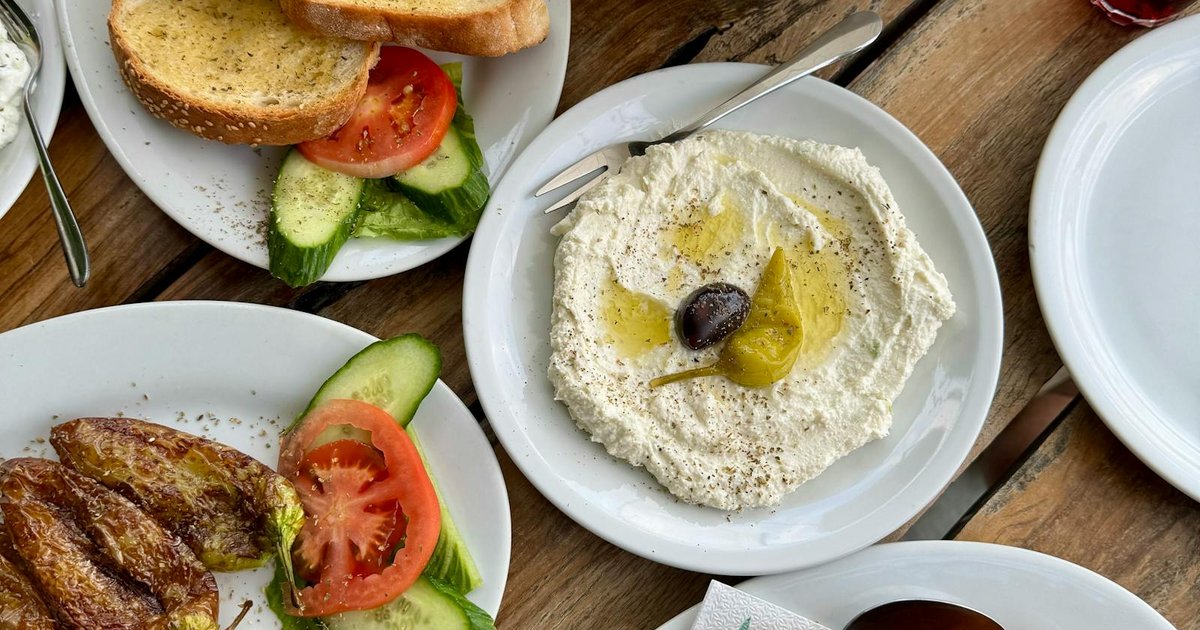
The question we hear most from first-time guests, usually on their first evening sitting on our terrace with a glass of local wine: “So where do we eat real Corfiot food?” Over the years we’ve written the same list on the back of so many receipts we decided to put it on paper properly. Here are the dishes worth hunting for, and why the island’s cooking is different from anywhere else in Greece.
A Table Shaped by Four Centuries of Venice
When guests expect the familiar Greek tourist menu — moussaka, souvlaki, Greek salad — Corfu surprises them. Venice ran the island from 1386 to 1797, and their spice rack stayed behind. Cinnamon in the meat sauce. Cloves and allspice in the slow-braised stews. Pasta treated as seriously as rice. Vinegar used the way other islands use lemon.
Layer that on top of the Greek foundations — Corfu’s legendary olive oil, sea bream fresh off the boat at Petriti, wild greens from the hills above the house — and you have a cuisine that genuinely belongs to this island alone.
The Dishes Worth Hunting For
Pastitsada — The Sunday Dish
The one we always tell guests to order first. Slow-braised rooster (or beef) in a deeply spiced tomato and red-wine sauce, served over thick hollow bucatini. The smell alone is worth the drive inland. When you find it cooked properly — three hours on low heat, onions melted into the sauce, cinnamon and clove just present enough to notice — you understand why every Corfiot grandmother has an opinion about the right recipe.
Sofrito — The Corfu Town Classic
Our favourite dish to recommend for guests who love garlic. Thin veal cooked in a pungent white-wine and vinegar sauce loaded with garlic and parsley, finished with mashed potato. Some first-timers find it bold. Most come back the next night and order it again. The quality of the sauce tells you everything about a kitchen.
Bourdeto — The Spicy Stew
Worth the drive to the west coast. A bright, paprika-stained fish stew that originated in Vatos village. Traditionally made with scorpionfish, but you’ll find it with whatever came in that morning. When guests tell us they don’t like “spicy,” we tell them to trust us on Bourdeto — the warmth is gentle, not punishing, and the broth with fresh bread is a near-religious experience.
Bianco — Light and Bright
When guests don’t want anything heavy after a long beach day, this is what we send them to order. White fish poached in a simple broth of lemon, garlic, olive oil and potatoes. Absolutely nothing to hide behind — if the fish isn’t fresh or the oil isn’t good, it falls apart. At the right taverna it’s astonishing.
Noumboulo — Smoked Pork, Corfu Only
If you bring one edible souvenir home, make it this. Pork tenderloin marinated in red wine and orange peel, then slow-smoked for weeks over olive wood with sage and bay leaves. PDO protected — legally it can only be made here. Order it thin-sliced as a meze with local cheese before dinner; save room for the rest.
Kumquat — The Tiny Orange Fruit
If you’re visiting December through February you’ll see the trees covered in small orange fruits — kumquats, unique to Corfu within Greece. Try them candied, as a spoon sweet, in marmalade, and of course as the island’s signature liqueur (the orange-coloured peel version is more interesting than the clear flesh version, in our opinion). Many guests take home a bottle each.
The Sweet Things Guests Always Take Home
Our guests almost always leave with Mandolato in their suitcase — the Venetian-heritage honey-and-almond nougat, wrapped in that distinctive paper. It comes soft (morbido, chewy) or hard (duro, crunchy); both are excellent. Fogatsa — the orange-blossom-scented brioche bread — is breakfast territory and impossible to find outside the island. And spoon sweets made from kumquat, bergamot or bitter orange make excellent gifts, especially if you’re travelling to food-loving friends.
And the Dishes Most Guidebooks Skip
Tsigareli — wild greens sauteed with onion, tomato and red pepper — is the green dish we order with almost every meal. Savoro (fried small fish marinated in vinegar, garlic, rosemary and raisins) is a classic meze you’ll only find in traditional kitchens. Strapatsada, the Corfu tomato-and-egg scramble, is how we finish the working week at home — and it appears on taverna breakfast menus too.
Our House Rules for Eating on Corfu
Drive inland. The best cooking sits in village tavernas away from the waterfront — Doukades, Skripero, Strinilas, Liapades. Prices are half what they are on the coast.
Eat late. Locals don’t sit down until 9 PM. Going earlier means you’ll share the dining room with other tourists, not with the family whose grandmother cooked your dinner.
Ask for krasi hima. House wine from the taverna’s own barrels. Usually 4–6 euros for half a litre, and it tells you how serious the place is.
Look at what’s cooking. Walk into the kitchen — it’s welcomed — and point at the pot that smells best.
Making the Most of It From Your Stay
Our beach houses put you near the sea but within ten minutes of village kitchens that outsiders never find. Our restaurant shortlist covers the ones we send guests to on repeat. For a town-based alternative — if walking to dinner in the Old Town each night sounds more like you — Oikia 4 in the heart of Corfu Town is our partner apartment, ten minutes on foot from Pastitsada and kumquat liqueur done properly.
★ Wheels for the Food Pilgrimage
The taverna that will change your idea of Pastitsada is a 20-minute drive from the coast. Herbie Cars — our partner for rentals — delivers to the house, the airport, or the port. Free delivery, honest prices.
Book a car →★ Town or Beach Stay?
If this article has you dreaming of walking from Corfu Town’s old market to dinner, see our partner Oikia 4. If you want to cook your own feast after a morning at the beach, browse our houses.
View our properties →And if you’re looking for a wider lens — a full travel guide to Corfu Town, day trips, and the rest of the island — our friends at CorfuRide have put together a definitive reference with 2,900+ places across the island.