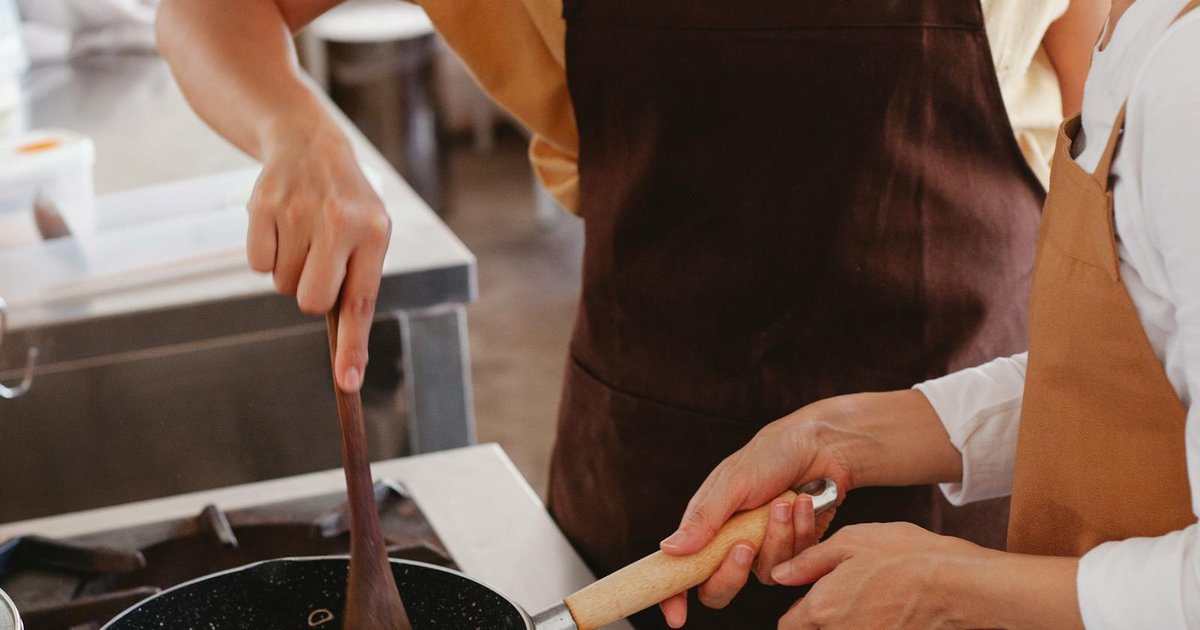
One of the questions we most enjoy getting from guests: "Is there a cooking class worth doing here?" The answer is yes, there are several — and knowing which kind to book makes all the difference between an hour pretending to chop vegetables and a genuine half-day you'll tell your friends about.
Corfiot food is the most Venetian cuisine in Greece, and that is what makes it worth learning on the island itself. Pastitsada, sofrito and bourdeto are not the dishes you'll meet in Athens or Santorini — they grew up here in the island's centuries of Venetian rule. Here is our guest-tested guide to the classes that get it right.
Why We Recommend It
Most of our guests cook a little at home. A cooking class gives them something they can replicate in their own kitchen a month later — and Corfiot recipes reward being learnt properly. The slow pastitsada reduction, the specific way to strain yogurt for tzatziki, the knack of getting loukoumades crisp and honey-coated — these are small skills that make the difference between Greek food and actual Greek food.
What a Good Class Looks Like
Three to five hours, small group (six people maximum is ideal), and the person teaching is the person cooking — not a narrator watching an assistant chop. The better classes structure the day like this:
Market visit — 45 minutes at a local market picking ingredients. Only some classes include it; pay the extra.
Prep — 30 minutes mise en place, olive oil introduction, menu explanation.
Cooking — 90–120 minutes hands-on. Everyone chops, stirs, seasons.
Shared meal — the payoff. An hour or more at the table eating what you cooked, usually with local wine.
The Classes Our Guests Love
Farm-Based, Half Day
Our favourite category. A family-run olive estate inland, often including a tasting of the farm's oil and a walk through the groves. The class is taught in the working family kitchen. €80–140 per person. Usually 5 hours door-to-door.
Home-Style with a Yiayia
Small classes, often in someone's village kitchen. The cook is a grandmother, the recipes are what she makes for her family, and the whole thing feels like an invitation rather than a product. €50–90 per person.
Professional Kitchen Workshops
Restaurant kitchens that run classes in off-hours. Technique-focused; better for guests who already cook reasonably well and want to learn specific skills rather than cultural context. €70–110 per person.
Dishes Worth Learning
The Corfiot Core
Pastitsada. The signature Corfu dish. Rooster or beef with tomato, cinnamon, cloves and bay, three hours low-and-slow, served over thick bucatini. Once you make it at home you understand why every taverna on the island serves it.
Sofrito. Veal in a white-wine, garlic and parsley sauce. Italian-Venetian heritage; faster than pastitsada; forgiving.
Bourdeto. Fish stew in paprika and tomato, hot with red pepper. The oldest fisherman's dish on the island.
Meze That Work Back Home
Tzatziki — harder than it looks. Strain the yogurt overnight.
Melitzanosalata — smoky aubergine dip. The char is the flavour.
Dolmades — stuffed vine leaves. The rolling is slow; the recipe is easy.
Dessert
Loukoumades — tiny honey doughnuts. The skill is the oil temperature.
Baklava — on Corfu, made with walnut rather than pistachio. Worth the hour of layering.
Markets Worth Visiting
Classes that include a market visit are almost always better. The Corfu Town Covered Market on Desilla Street runs 7am–2pm daily; the Saturday morning outdoor market at the Old Fortress entrance is where farmers from across the island bring seasonal vegetables and wild greens. Your instructor will use the visit to teach you how to read fresh fish, judge olive oil by smell, and spot proper village cheeses against factory imitations.
A Host's Tip
Book early. The small family-run classes have 4–6 spots per session and fill up a week ahead in June and September, two weeks in July and August. We keep a short list of operators we trust — ask us when you arrive and we'll point you at the right one for what you want to learn.
For Families
Children from 8–9 upwards usually enjoy a good class. Dolmades rolling and loukoumades frying are particularly child-friendly. Ask the operator in advance whether they take children and whether they adjust the menu (less chilli in bourdeto, for instance).
What You Take Home
Recipe cards, a bottle of the olive oil you cooked with, and — more importantly — the rhythm of Corfiot cooking: the understanding that pastitsada rewards three hours of patience, that bourdeto needs a slow reduction, that tzatziki is 80% about the yogurt straining and 20% about everything else.
Getting to Class
Most good classes are in countryside farms or village houses rather than Corfu Town itself. Transfers add up; your own car is usually the cheapest option and gives you freedom for the rest of the day.
★ Rent a Car with Herbie
Our rental partner will deliver the car to wherever you're staying. Useful for a farm-kitchen class since the transfer shuttles operators offer tend to be expensive and inflexible.
Book a car →Your Own Kitchen to Practise In
Our beach houses come with proper kitchens — the evening after the class is usually when guests repeat the tzatziki and make a small pastitsada attempt. In town, our friends at Oikia 4 keep a well-equipped Corfu Town apartment for guests who prefer a central base with a kitchen.
★ Oikia 4 — Corfu Town Apartment
Central Corfu Town apartment with a full kitchen — right by the Old Town market, so you can pick up fresh ingredients every morning for practising the class recipes.
View apartment →Further Reading
For the map of what you'll be cooking, see our guide to Corfiot dishes. The olive oil tasting guide covers the key ingredient behind almost everything, and the traditional restaurants guide shows you where the best cooks on the island eat when they go out.